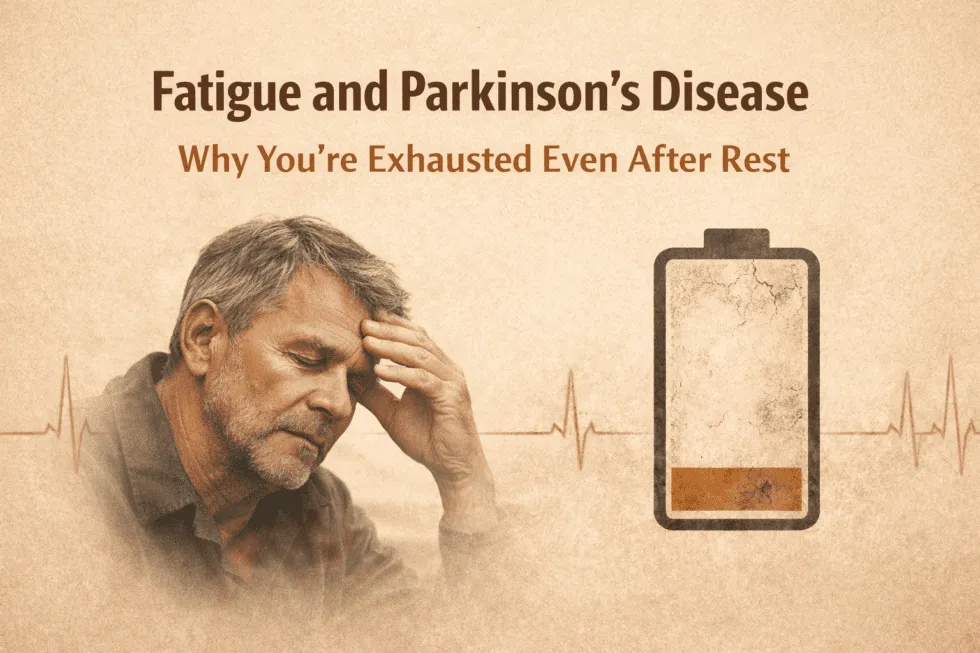
Fatigue and Parkinson’s Disease. Why You’re Exhausted Even After Rest
Fatigue and Parkinson’s Disease. Why You’re Exhausted Even After Rest
Fatigue is one of the most common and misunderstood symptoms of Parkinson’s disease. Many people describe it as one of the hardest parts of living with Parkinson’s, even more challenging than tremors or stiffness.
This is not ordinary tiredness. Parkinson’s fatigue does not always improve with rest and often feels out of proportion to activity levels.
What Parkinson’s Fatigue Feels Like
People with Parkinson’s often describe fatigue as:
A heavy, whole body exhaustion
Mental fog or reduced concentration
Loss of motivation or energy
Feeling drained early in the day
This type of fatigue can affect physical, emotional, and cognitive functioning.
Why Parkinson’s Causes Fatigue
Fatigue in Parkinson’s is neurological. Changes in dopamine and other neurotransmitters affect energy regulation, motivation, and alertness.
Poor sleep, medication timing, mood changes, and reduced physical conditioning can all contribute.
The Impact of Fatigue on Daily Life
Fatigue affects:
Ability to exercise
Social engagement
Concentration and memory
Emotional wellbeing
Because it is invisible, fatigue is often misunderstood by others.
Managing Fatigue Through Lifestyle
Lifestyle strategies may include pacing activities, prioritising sleep quality, gentle movement, nutrition support, and emotional wellbeing practices.
Fatigue management is about balance, not pushing through.
When to Seek Support
Persistent fatigue should be discussed with healthcare professionals. Understanding fatigue as part of Parkinson’s helps people access better support and reduce self blame.